If you’ve outgrown baking soda volcanoes and want science projects that actually challenge you — projects that involve real data, real engineering, and real scientific thinking — you’re in the right place Top 10 Science Project Ideas for Students.
These 10 advanced science project ideas are designed for students in Grade 7 and above who want to push past the basics. Each one mirrors the kind of work done by real scientists and engineers — giving you a significant edge at science fairs, olympiads, and university applications.
At International School Guwahati, our STEM programme actively encourages students to take on research-level projects. These are among our favourites.
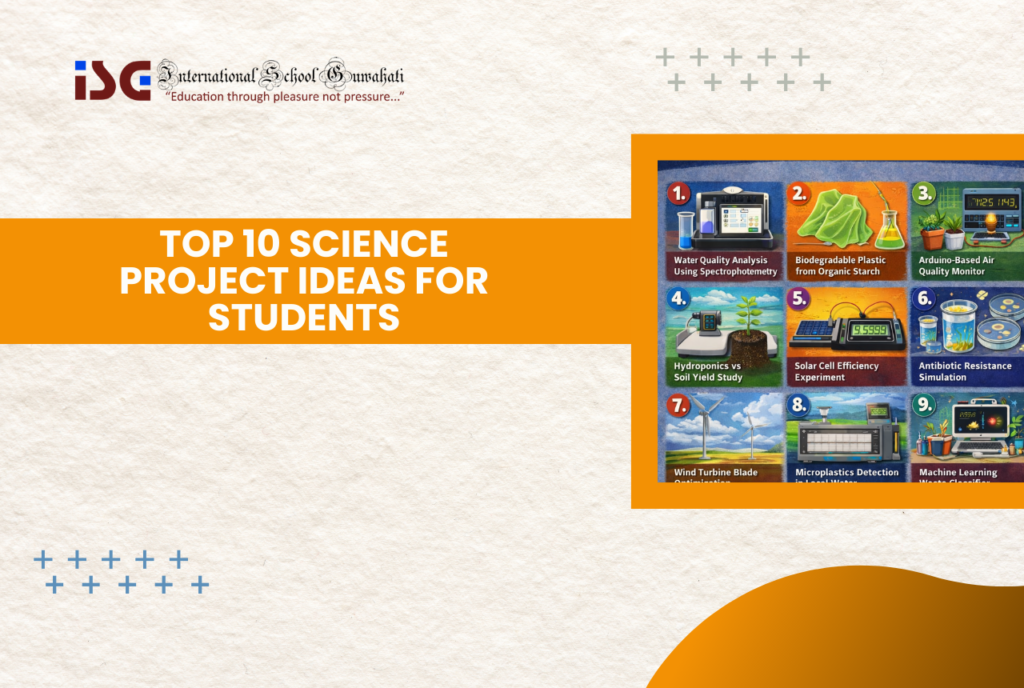
The top 10 advanced science project ideas are: (1) Water Quality Analysis Using Spectrophotometry, (2) Biodegradable Plastic from Organic Starch, (3) Arduino-Based Air Quality Monitor, (4) Hydroponics vs Soil Yield Study, (5) Solar Cell Efficiency Experiment, (6) Antibiotic Resistance Simulation, (7) Wind Turbine Blade Optimization, (8) Microplastics Detection in Local Water, (9) Seismic Activity Monitor, (10) Machine Learning Waste Classifier. Each project involves hypothesis testing, data collection, and multi-variable analysis.
Your Top 10 Advanced Science Projects
1. Water Quality Analysis Using Spectrophotometry

Instead of simply filtering water, you’ll conduct a rigorous chemical analysis of water samples collected from different local sources — rivers, taps, wells, and stormwater drains. Using a spectrophotometer or DIY colorimeter, you’ll measure turbidity, dissolved oxygen, nitrate levels, and pH to build a detailed water quality index. Your findings will be directly comparable to WHO drinking water standards — making this a genuinely impactful piece of research.
What you need: Water samples from multiple sources, pH meter, dissolved oxygen kit, nitrate test strips, spectrophotometer or DIY colorimeter (LED + photoresistor), data logging software
What you’ll learn: Quantitative chemical analysis, spectrophotometry, environmental monitoring, data interpretation, scientific report writing
2. Biodegradable Plastic from Organic Starch
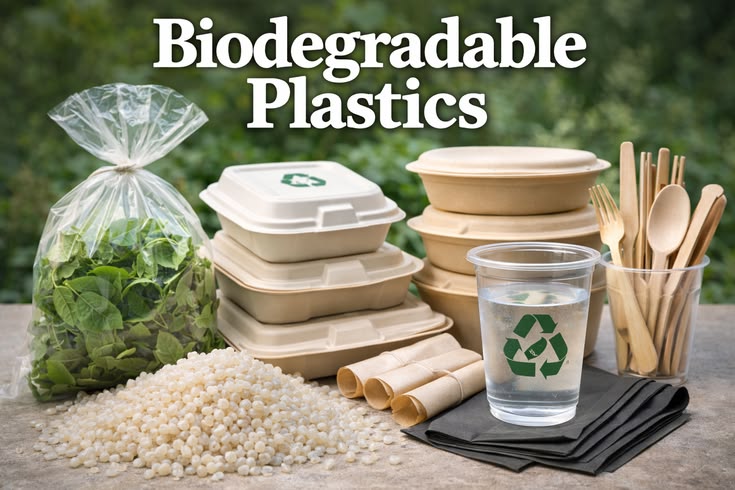
You’ll synthesise bioplastic film from potato or corn starch and compare its mechanical properties — tensile strength, flexibility, and degradation rate — against conventional petroleum-based plastic. This involves controlled synthesis, materials testing, and timed biodegradation trials buried in soil. It’s a chemistry-meets-sustainability project that directly addresses one of the biggest environmental challenges of our time.
What you need: Potato/corn starch, glycerol, vinegar, water, weighing scale, tensile testing setup (weights + clamps), soil samples, moisture meter
What you’ll learn: Polymer chemistry, materials science, biodegradation kinetics, comparative experimental design, sustainability engineering
3. Arduino-Based Air Quality Monitor with Data Logging

You’ll design and build a portable air quality monitoring device using an Arduino microcontroller paired with sensors for PM2.5 particulate matter, CO₂ concentration, temperature, and humidity. Once built, you’ll deploy it across multiple locations — indoors, outdoors, near traffic — log the data over several days, and analyse spatial and temporal pollution patterns. This project sits right at the intersection of electronics, coding, and environmental science.
What you need: Arduino Uno/Nano, MQ-135 gas sensor, GP2Y1010AU0F dust sensor, DHT22 sensor, SD card module, 16×2 LCD, jumper wires, 3D-printed or laser-cut enclosure
What you’ll learn: Embedded systems programming, sensor calibration, environmental data analysis, IoT principles, scientific communication
4. Hydroponics vs Soil: Comparative Yield and Nutrient Study
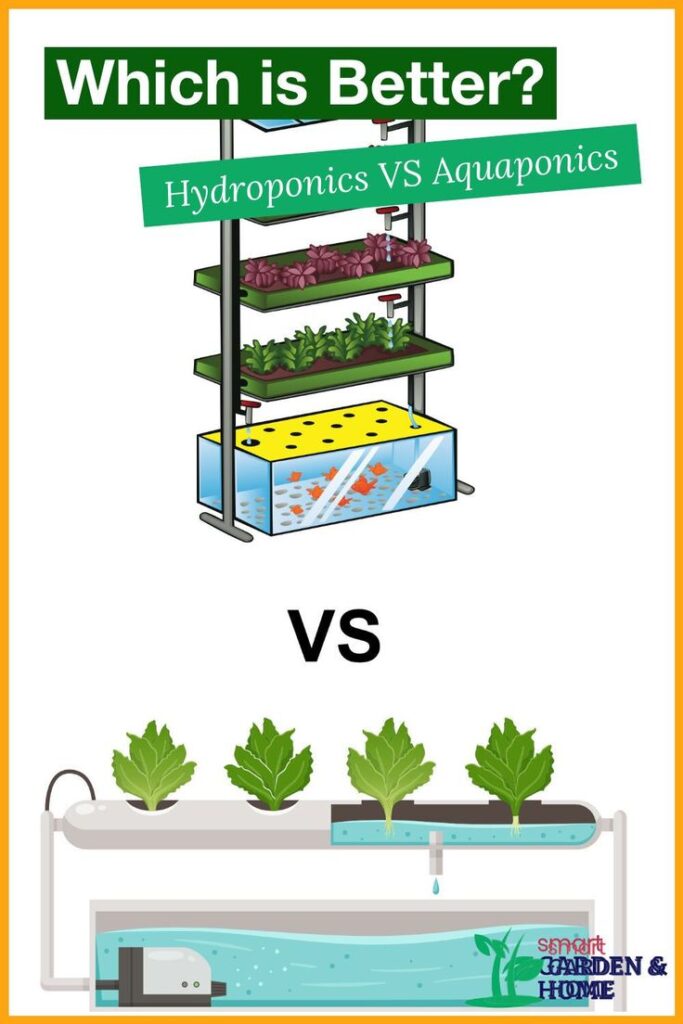
You’ll run a controlled 4–6 week experiment growing identical plant species simultaneously in a hydroponic system and in standard soil, under the same light and temperature conditions. Beyond just measuring yield, you’ll test the nutrient content of the harvested produce using titration and test kits — giving you biochemical data on top of the agronomic results. It’s a project that combines plant biology, chemistry, and food science.
What you need: Hydroponic system (NFT or wick setup), nutrient solution, pH and EC meters, identical seedlings, grow lights, soil pots, weighing scale, nutrient test kits (nitrogen, phosphorus, potassium)
What you’ll learn: Plant physiology, hydroponic engineering, nutrient chemistry, controlled experimental design, comparative data analysis
5. Solar Cell Efficiency Under Variable Conditions
Rather than simply demonstrating that solar panels work, you’ll quantify how their efficiency changes across variables: angle of incidence, surface temperature, light intensity, partial shading patterns, and dust accumulation. You’ll calculate power output (P = IV) at each condition and build efficiency curves — the same methodology used by solar engineers in the field.
What you need: Monocrystalline and polycrystalline solar cells, multimeter, variable resistor (load), lux meter, thermometer, protractor, controlled light source, graphing software
What you’ll learn: Photovoltaic principles, electrical power calculations, efficiency analysis, renewable energy engineering, scientific graphing and curve fitting
6. Antibiotic Resistance: A Simulated Evolution Study

Using safe, non-pathogenic bacteria (E. coli K-12 or Bacillus subtilis) and standard antibiotic discs on agar plates, you’ll investigate how repeated sub-lethal antibiotic exposure influences bacterial growth patterns over successive generations — simulating the mechanism by which antibiotic resistance develops. You’ll measure inhibition zones, track changes across generations, and connect your observations to real-world antimicrobial resistance (AMR) data.
What you need: Nutrient agar plates, E. coli K-12 or B. subtilis culture, antibiotic discs (ampicillin, tetracycline), inoculation loop, Bunsen burner, incubator (37°C), ruler, biosafety cabinet or clean bench
What you’ll learn: Microbiology lab technique, natural selection mechanisms, antibiotic resistance, quantitative zone-of-inhibition analysis, biosafety protocols
7. Wind Turbine Blade Design Optimisation
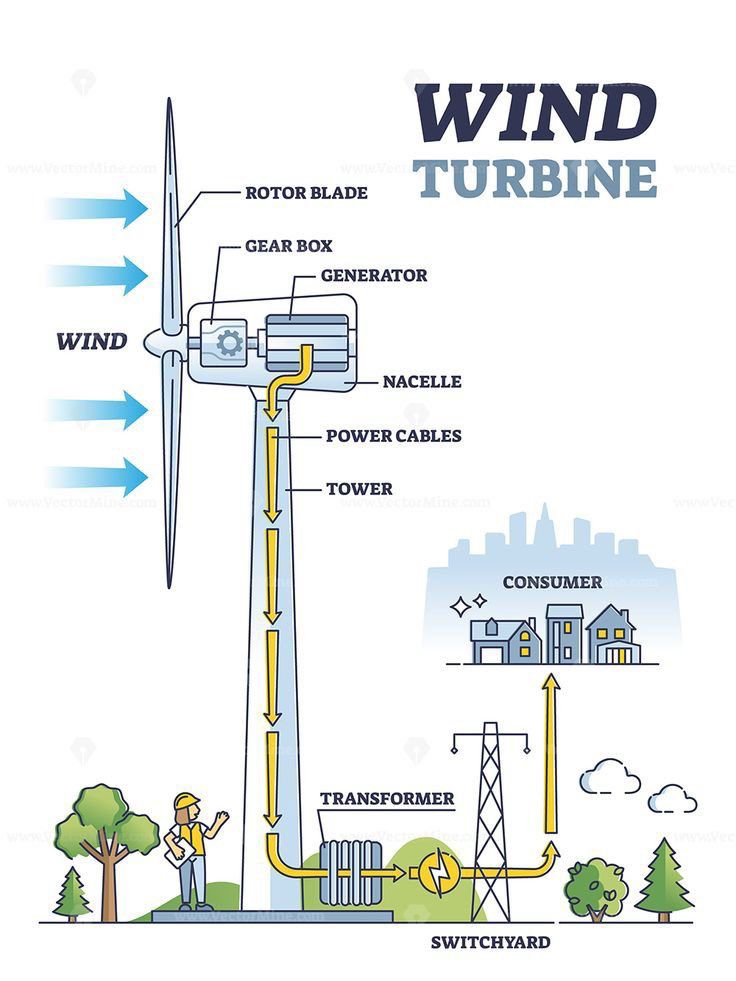
You’ll apply aerodynamic principles to design and test multiple wind turbine blade configurations — varying the number of blades, pitch angle, blade profile, and surface material. Each configuration will be tested in a controlled wind environment (fan at fixed speed), and you’ll measure voltage output using a small generator. The goal is to identify the design that maximises power coefficient — exactly what wind engineers do before scaling up.
What you need: Small DC generator, variable-speed fan, balsa wood or 3D-printed blades, protractor, multimeter, anemometer, rotary encoder (optional), data logging software
What you’ll learn: Aerodynamics, blade element momentum theory (introductory), energy conversion, engineering design iteration, quantitative performance analysis
8. Microplastics Quantification in Local Water and Soil
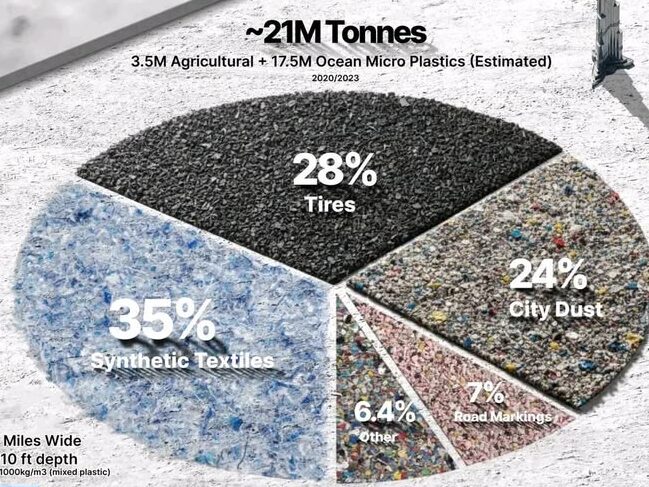
This goes well beyond simply detecting whether microplastics are present. You’ll collect water and soil samples from multiple sites, use density separation and vacuum filtration to isolate particles, and then characterise them under a microscope — categorising by size, shape (fibre, fragment, bead), and colour. You’ll calculate microplastic concentration per litre or per gram and produce a spatial contamination map of your local area.
What you need: Water and soil samples, sodium chloride (for density separation), vacuum filtration setup, 0.45 µm filter paper, stereo microscope or digital microscope, forceps, petri dishes, mapping software
What you’ll learn: Environmental sampling methodology, density separation chemistry, microscopy and particle classification, contamination mapping, quantitative environmental analysis
9. Low-Cost Seismic Activity Monitor (Seismograph)
You’ll build a functional seismograph using a geophone sensor, Arduino, and signal amplification circuit — capable of detecting and recording vibrations from nearby traffic, construction, or minor seismic events. You’ll calibrate your device against published seismic data, analyse waveform patterns, and investigate the relationship between distance and signal amplitude. It’s an instrument-building project that combines physics, electronics, and geoscience.
What you need: Geophone sensor (SM-24 or similar), Arduino Uno, op-amp circuit components (LM358), oscilloscope or serial plotter, SD card module, vibration isolation platform
What you’ll learn: Seismic wave physics, signal amplification and filtering, instrument calibration, waveform analysis, electronics and geoscience integration
10. Machine Learning Image Classifier for Waste Sorting
You’ll train a convolutional neural network (CNN) — using a pre-trained model like MobileNet via TensorFlow Lite or Teachable Machine — to classify images of waste into categories such as plastic, paper, glass, metal, and organic. You’ll build and curate your own dataset, evaluate model accuracy using a confusion matrix, and if possible, deploy it to a Raspberry Pi with a camera module as a working prototype. This is genuine applied AI — the same approach used in industrial recycling plants.
What you need: Laptop with Python/TensorFlow or Google Teachable Machine, labelled image dataset (self-collected or open-source), Raspberry Pi + camera module (optional), confusion matrix analysis tools
What you’ll learn: Machine learning fundamentals, convolutional neural networks, dataset curation and bias, model evaluation metrics, responsible AI and environmental applications
Power Benefits of Projects for Students
Project-based learning is totally opposite of conventional methodologies of learning. Projects Work holds immense value. Here’s why they’ve become a gamechanger in the academic growth of student
How to Make Your Advanced Project Stand Out
Choosing a challenging project is just the first step. Here’s how you ensure your work is genuinely impressive:
- Frame it as real research — define a clear hypothesis, methodology, and research question before you begin
- Collect enough data — single-trial results won’t hold up to scrutiny; repeat your experiments at least 3 times
- Use statistical analysis — even basic mean, standard deviation, or a t-test adds significant credibility
- Connect to real-world relevance — judges and evaluators respond strongly to projects tied to actual problems
- Document everything — a detailed lab notebook or research journal shows scientific rigour
- Know your theory deeply — be ready to explain the underlying science behind every result you present
Take Your Science Further at International School Guwahati
At International School Guwahati, you don’t have to wait for a science fair to do research-level work. Our advanced STEM programme, fully equipped laboratories, and mentorship from experienced teachers give you the environment to pursue projects like these as part of your everyday learning — and to represent your school at regional and national science competitions.
📌 Explore our STEM curriculum and admissions at internationalschoolguwahati.com
Your Next Step: Pick One and Go Deep
The difference between a good science project and a great one isn’t the topic — it’s the depth. Any project on this list, done rigorously and with genuine curiosity, has the potential to win at a competitive science fair or form the basis of a strong university application portfolio.
Pick the project that connects most with your interests, commit to doing it properly, and don’t be afraid to follow the data wherever it leads. That’s what real science looks like.
1. Which project is best for school?
Ans: The best school projects are determined completely by the subject and your interest. Choose topics that excite you or that align with your passion. Some of the engaging topics you might like are science experiments, building models, making presentations, producing a short film, etc.
2. How do I find a good project idea?
Ans: To find a good project idea for students you should consider hobbies and subjects enjoy. So, try reviewing previous projects and assignments but with constant brainstorming as well. Think beyond your classroom setup, this will help you come out with creative and interesting topics.
3. What are the success factors of school project work?
Ans: Factors like carefully deciding on the topic of the project or planning out the project determines success factors of school project work. Thoroughly researching the topic, and making a detailed analysis of it gives it a proper execution.
4. How do you write a project?
Ans: To write a perfect project follow these steps:
Identify the problem.
Give your solution to the problem.
How to execute your solution.