Bhogali Bihu 2026: Dates, Uruka Feasts, Meji Rituals, Harvest Festival of Assam & Pitha Traditions.
Explore Bhogali Bihu 2026 in detail with correct dates, Uruka 2026 feasts, Meji bonfires, what is the harvest festival of Assam, how Meji and Bhelaghar are made, Magh 1 significance and Bhogali Bihu pitha traditions.
Bhogali Bihu 2026 is one of the most important cultural festivals of Assam, deeply rooted in the agrarian lifestyle and seasonal rhythm of the region. Celebrated after the completion of the winter harvest, this festival symbolises abundance, gratitude, and collective joy. Known for its grand feasts, ritual bonfires, and strong sense of community, Bhogali Bihu reflects the essence of Assamese heritage.
Also referred to as Magh Bihu, Bhogali Bihu 2026 is distinct from the other Bihu festivals because it celebrates fulfilment rather than anticipation. While Rongali Bihu welcomes new beginnings and Kongali Bihu reflects restraint, Bhogali Bihu marks prosperity—when granaries are full and people gather to enjoy the fruits of their labour.
What Is the Harvest Festival of Assam?
A frequently asked question is what is the harvest festival of Assam. Assam celebrates three major Bihu festivals aligned with agricultural cycles—Rongali, Kongali, and Bhogali. Among these, Bhogali Bihu is the true harvest festival.
Therefore, when people ask what is the harvest festival of Assam, the most accurate answer is Bhogali Bihu. It marks the completion of the harvesting season, expressing gratitude to nature for agricultural success and food security.
Understanding what is the harvest festival of Assam also involves recognising its social importance. Bhogali Bihu encourages sharing, equality, and community participation, ensuring that prosperity is celebrated collectively rather than individually.
Bhogali Bihu 2026: Correct Dates and Festival Timeline
Bhogali Bihu 2026 is observed over three culturally significant days, each carrying unique rituals and symbolic meaning. The festival follows the Assamese calendar and marks the transition into the month of Magh.
Bhogali Bihu 2026 Schedule
- Uruka Feasts and Community Gatherings:
Night of 13 January 2026 - Meji Bonfires and Ritual Offerings:
Dawn of 14 January 2026 - Magh Bihu (Assamese Magh 1):
15 January 2026
This three-day observance reflects the depth of Bhogali Bihu 2026, where celebration unfolds gradually through feasting, ritual purification, and social harmony.
Historical Roots of Bhogali Bihu
The origins of Bhogali Bihu lie in ancient Assamese agrarian society. Agriculture shaped daily life, and seasonal festivals emerged as expressions of gratitude and reverence for nature. Bhogali Bihu evolved as a post-harvest celebration when farming communities could finally pause and rejoice.
Over centuries, Bhogali Bihu 2026 continues to preserve these ancient traditions, blending ritual fire worship, communal dining, and agricultural symbolism. These historical roots help explain what is the harvest festival of Assam from a cultural and historical perspective.
Uruka 2026: The Night of Feasts, Fire and Fellowship
Uruka 2026, celebrated on the night of 13 January, marks the beginning of Bhogali Bihu festivities. It is the most vibrant and socially engaging part of the festival.
On Uruka night, people gather near farmlands, riverbanks, or open spaces to cook and feast together. Temporary huts known as Bhelaghar serve as communal kitchens and dining spaces. Meals prepared during Uruka 2026 include freshly harvested rice, vegetables, fish, and meat, cooked over open flames.
Uruka 2026 is not just about food. It is a night of storytelling, folk music, laughter, and shared cultural experiences. Elders pass down traditions, while younger generations learn by participation. This collective celebration reflects the true spirit of Bhogali Bihu 2026.
How Are Meji and Bhelaghar Made?
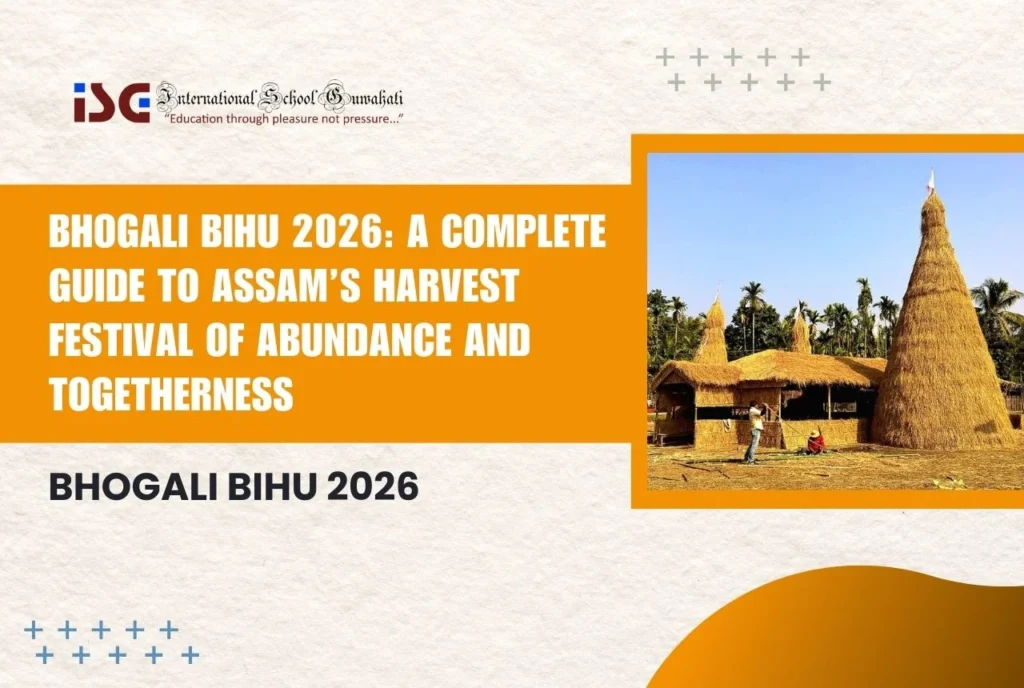
One of the most culturally significant aspects of the festival is understanding How are Meji and Bhelaghar made? These structures are central to Bhogali Bihu rituals and symbolise cooperation and tradition.
Construction of Bhelaghar
To answer How are Meji and Bhelaghar made?, we begin with Bhelaghar. These temporary huts are built using bamboo, straw, hay, banana leaves, and dried grass. Community members, particularly the youth, work together to construct them.
Bhelaghar represents unity and creativity. During Uruka 2026, it becomes the heart of communal feasting and social interaction.
Construction of Meji
The second part of How are Meji and Bhelaghar made? focuses on the Meji. Meji is a tall, conical structure made of bamboo poles, firewood, straw, and dried vegetation.
Built carefully to ensure stability and proper burning, the Meji stands as a symbol of purification and renewal. It is ceremonially lit at dawn on 14 January during Bhogali Bihu 2026.
Meji Bonfires at Dawn on 14 January 2026
The dawn of 14 January 2026 marks one of the most sacred moments of Bhogali Bihu 2026. People wake early, bathe, and gather around the Meji to perform rituals.
Offerings such as rice, vegetables, betel nut, pitha, and seasonal produce are placed into the fire. The Meji bonfire symbolises the burning away of negativity and the welcoming of prosperity.
The ashes left behind are often scattered over farmlands, symbolising fertility and hope for a successful future harvest. This ritual powerfully reinforces what is the harvest festival of Assam.
Magh Bihu on 15 January 2026: Assamese Magh 1
15 January 2026 marks Magh Bihu, which falls on Magh 1 according to the Assamese calendar. This day officially begins the Assamese month of Magh and concludes the Bhogali Bihu celebration.
Magh Bihu is observed with family gatherings, greetings, and continued enjoyment of traditional foods, especially Bhogali Bihu pitha. The day reflects calm celebration, gratitude, and reflection.
The alignment of Magh Bihu with Assamese Magh 1 strengthens its agricultural and calendrical significance, further explaining what is the harvest festival of Assam.
Bhogali Bihu Pitha: Traditional Flavours of the Harvest Festival
Food plays a central role in Bhogali Bihu 2026, and Bhogali Bihu pitha represents the soul of the festival’s culinary heritage.
Bhogali Bihu pitha are rice-based delicacies prepared using freshly harvested rice flour. Common ingredients include jaggery, sesame seeds, coconut, and milk.
Popular varieties of Bhogali Bihu pitha include:
- Til Pitha
- Ghila Pitha
- Sunga Pitha
- Narikol Pitha
- Tekeli Pitha
The preparation of Bhogali Bihu pitha is often a family activity, reinforcing intergenerational bonds and preserving traditional cooking techniques.
Agricultural Importance of Bhogali Bihu 2026
Bhogali Bihu 2026 reflects the agricultural rhythm of Assam. It marks the completion of the winter harvest and acknowledges the effort of farmers.
This agricultural significance lies at the heart of what is the harvest festival of Assam, celebrating food security, sustainability, and harmony between humans and nature.
Social and Cultural Importance of Bhogali Bihu
Bhogali Bihu 2026 promotes social equality and inclusiveness. Community feasts during Uruka 2026 ensure that everyone participates, regardless of economic or social background.
The festival strengthens values such as generosity, hospitality, respect for elders, and cultural pride. These values continue to make Bhogali Bihu relevant in modern society.
Bhogali Bihu in Modern and Urban Assam
In urban areas, Bhogali Bihu 2026 is celebrated through community events, cultural programmes, and symbolic Meji rituals. Despite urbanisation, people continue to observe Uruka 2026, prepare bhogali bihu pitha, and educate younger generations about How are Meji and Bhelaghar made?
This adaptation ensures that the spirit of Bhogali Bihu remains alive across generations and locations.
The Timeless Spirit of Bhogali Bihu 2026: A Celebration of Gratitude, Prosperity and Cultural Continuity
Bhogali Bihu 2026 stands as a timeless expression of Assam’s agrarian heritage and cultural wisdom. From the joyful feasts of Uruka 2026 to the sacred flames of the Meji and the calm observance of Magh Bihu on Magh 1, every ritual reflects gratitude, unity, and renewal.
By understanding what is the harvest festival of Assam, preserving the knowledge of How are Meji and Bhelaghar made?, and continuing the tradition of Bhogali Bihu pitha, Bhogali Bihu 2026 ensures that Assamese culture remains vibrant, meaningful, and deeply connected to nature.
This festival is not merely a celebration—it is a living tradition that honours abundance, strengthens community bonds, and carries forward the enduring spirit of Assam.